Insights
Why your fund type matters
...and what happens when you change?

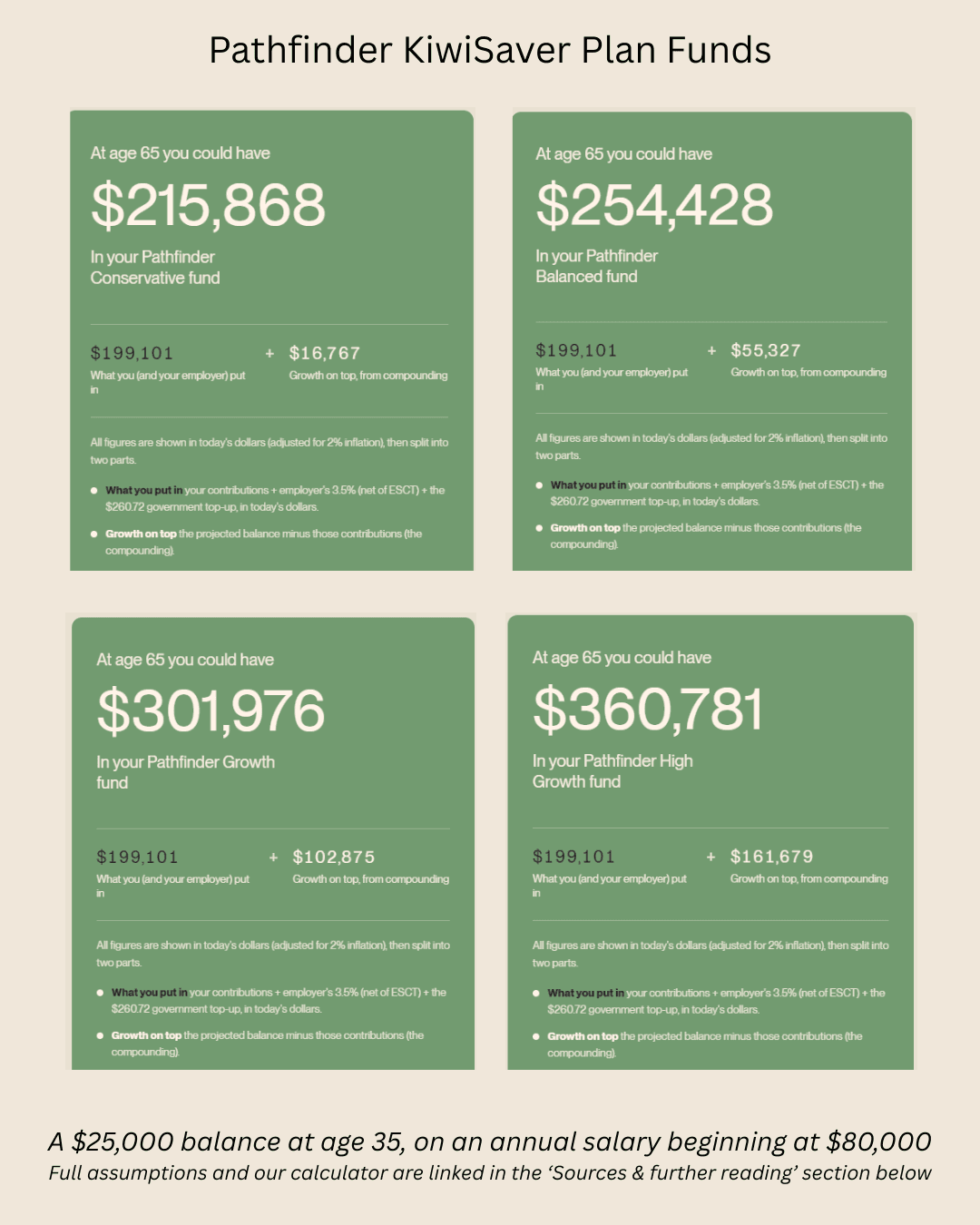
Did you know that being in the wrong fund type could mean a difference of thousands of dollars by the time you retire?
That is why choosing the right fund type, and making sure it aligns with your situation, is exciting, not admin.
What is a fund type?
A fund type can be thought of as a bucket; each bucket has a different label based on risk (Conservative, Balanced, High for example) and each bucket has different investments in it based on the risk level of its label.
For example; the highest risk bucket would be a fund type labelled ‘High Growth’ or ‘Aggressive’ – this would have riskier investments that aim to deliver higher returns – for example private assets or global equities.
Choosing the right fund type is personal. It depends on a number of factors related to your situation, including, but not limited to:
- How comfortable you are with market ups and downs (risk)
- The return you reasonably expect to achieve from your investments
- Your investment timeframe
- Your goals, such as buying your first home or saving for retirement
A lot of the time, this means choosing a fund that you can stick with for the long term. However, that does not mean you should never make changes.
As a general guide, it can be helpful to review your fund choice:
1) When your circumstances change materially (for example you get a new job, or receive an inheritance), and
2) Every few years, as a check‑in to see how you are tracking against your plan
Understanding what the difference means:
KiwiSaver providers will normally offer a range of funds from Conservative through to Higher Growth or Aggressive options. Understanding the key differences between these can help you make more informed decisions.
Growth funds, or higher growth options, have a larger exposure to growth assets like shares, property, and/or private investments. In practical terms, this means owning shares in companies, REITS (Real Estate Investment Trusts), and other private businesses locally and around the world. These assets tend to deliver higher returns over the long term, but they can move up and down more in the short term (higher volatility).
On the other hand, conservative funds have a higher allocation to income assets such as cash and fixed interest investments. Fixed interest investments are typically bonds, which are effectively loans made by companies or governments to investors.
Within the Pathfinder KiwiSaver Plan Funds, you will also have some exposure to Green Bonds. These work in a similar way, except the money borrowed is specifically used to fund climate and environmental initiatives. You can learn more about bonds, Green Bonds, and the types of projects they support here.
Income assets can help reduce volatility, as they generally move up and down less than growth assets. However, investing in too many income assets too early can reduce the growth potential of your investment over the long term.
For example:
- The Pathfinder KiwiSaver High Growth Fund targets 90% in growth assets and 10% in income assets.
- The Pathfinder KiwiSaver Conservative Fund targets 90% in income assets and 10% in growth assets.
It's obvious - I’ll choose High Growth, right?
Does that mean you should choose the fund that is likely to give you the higher return?
Not always, especially if you do not fully understand what comes with that. It can be appealing to see a higher return, but that often comes with larger movements in both directions and so you should be aware of the risks involved.
So, what does this mean?
Your fund choice should reflect what you are using your KiwiSaver for and your time horizon.
If your goal is a first home deposit and you are getting closer to purchasing, being in a more conservative fund can help reduce the impact of short‑term market movements on your balance. That means keeping as much of your deposit as possible for your first home.
If you have used your KiwiSaver for your first home, already own a home, or do not plan to use your KiwiSaver before retirement, then your situation changes. The next time you can typically access your KiwiSaver is at retirement, which means your investment timeframe becomes longer again. At that point, it may be worth reviewing whether a higher growth fund is more suitable to help rebuild your balance over time.
If you are unsure, tools like our online quiz can help you assess what might be appropriate for your situation.
What happens when you change between funds?
Switching your fund type is generally a simple process. With Pathfinder, this can be done by completing the Changing your Investment Options Form on our website and sending it through to our team.
Once received, the team will process the change by selling the units in your existing fund and purchasing units in your newly selected fund. The process typically takes around 2–3 business days to complete and reflect in your account.
However, it is important to understand why you are making the change.
A common question: Should I wait to change fund types until the market is different?
A common behaviour is switching funds in response to headlines or market noise. When markets feel uncertain, it can be tempting to move to a more conservative option. Likewise, after periods of strong returns, moving into a higher growth fund can feel like the right move.
The challenge is not to make investment decisions in panic or haste. If you are a long-term investor the best advice can be to not look at your balance during periods of market fluctuation.
Over the past several years, there have been ongoing headlines around inflation, geopolitical events, wars and market uncertainty. Despite this, markets have continued to deliver returns over time.
KiwiSaver was designed as a long-term investment. And these investments don’t increase in value in a straight line. There will always be ups and downs, (just like in the rest of your life) but over the long-term, the ups generally outweigh the downs (meaning you’ll likely end up with a positive return despite it being a bumpy ride at times).
The key thing is always to make sure that your fund type is right for the amount of risk you should take and your current goals. Sticking with it is often more effective than switching between funds based on short‑term movements.
Could being in a higher growth fund compromise my ethics?
The short answer is no, there's no direct connection between a fund type and a fund's ethical standing. At Pathfinder we invest all our funds in-line with our Ethical Investment Policy (EIP), therefore all holdings within our Pathfinder KiwiSaver Plan Funds meet our strict ethical criteria. This is important because, regardless of the stage of life our conscientious investors are in, they can invest in a way that reflects their values.
Conclusion
Now you know your fund type could mean a difference of thousands of dollars by the time you retire.
Want to check if you're in the right fund type? Use our quiz!
You may also find it helpful to speak with our in‑house financial adviser, Trent, who can talk through your options and help you assess whether your Pathfinder investments continue to reflect your goals and values.
If you want inspiration for how to create (and stick to) a money plan, we've written an article here.
Sources & further reading
Disclosure
This blog is for information purposes only. This blog is not financial advice and should not be taken as providing investment, legal or tax advice.
Pathfinder Asset Management Limited is the issuer of the Pathfinder KiwiSaver Plan and Pathfinder Investment Funds. Product Disclosure Statements for the offers are available here.
We encourage all investors to receive financial advice before making their investment decision. Pathfinder is authorised to provide financial advice if you would like support with your investment decisions. You can learn more about our service in our Financial Advice Provider (FAP) disclosure statement.

by Trent Beauchamp
Customer Care Lead
Trent is a financial adviser, providing in-house financial advice on Pathfinder products and support for our members. He brings over five years of experience in financial services, having previously worked as a Mortgage Adviser and at Craigs Investment Partners supporting their members and adviser network.
After spending a year overseas, Trent saw first-hand the extremes of the wealth divide and is committed to reducing income inequality by using the skills he has developed in the industry to educate people in financial literacy and guide them to confidently take control of their financial future.
Trent holds the New Zealand Certificate in Financial Services (Level 5), Investment Strand. He also holds a Bachelor of Business from Auckland University of Technology (AUT), majoring in Finance with a minor in Accounting.